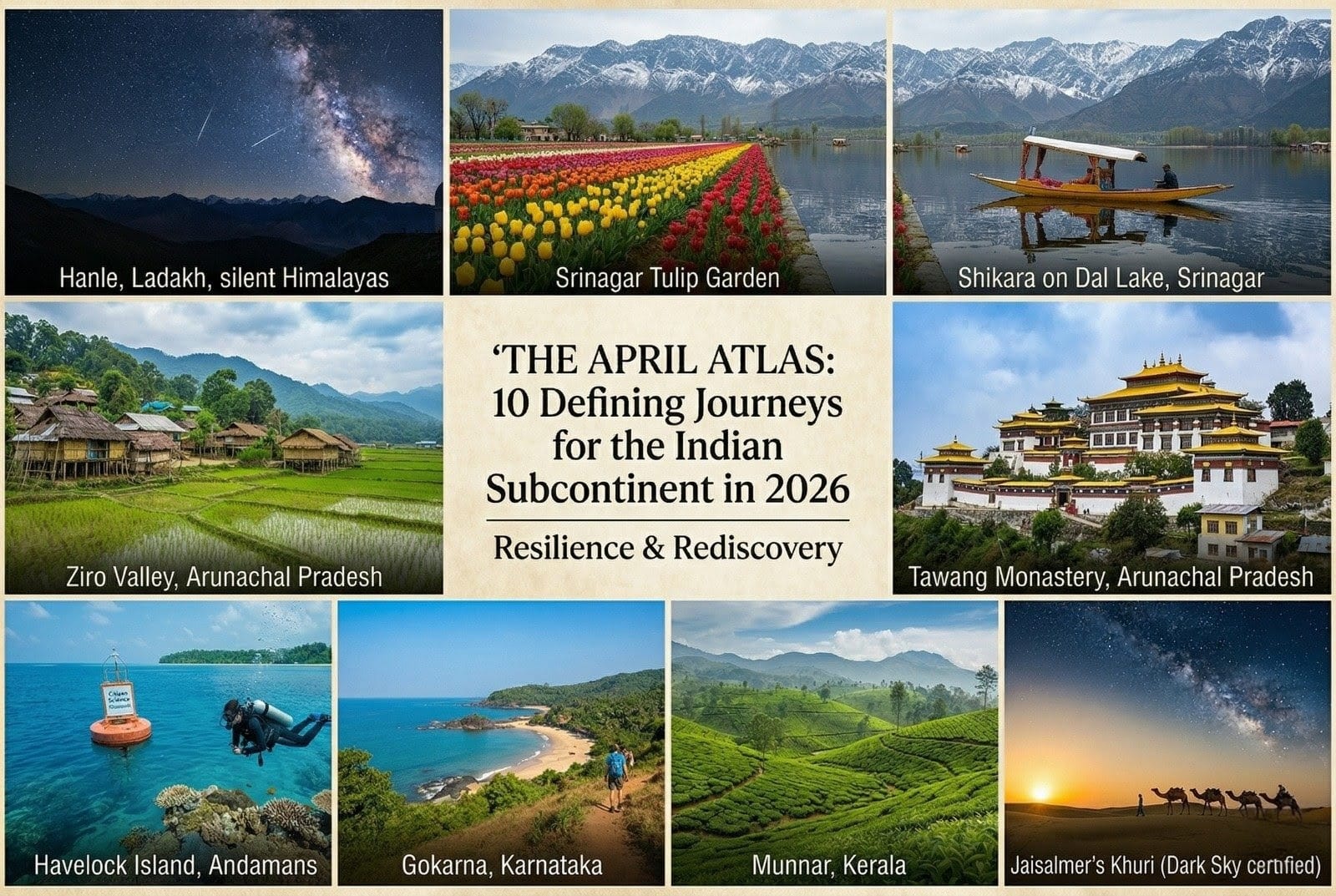
The map of India in April is a study in contrasts. While the southern peninsula begins its humid dance with the pre-monsoon clouds, the northern reaches are waking up from a six-month slumber. For the readers of Travellers Atlas, this month represents the ultimate opportunity for “Resilience and Rediscovery”—finding beauty in the shifting seasons and the quiet corners of the country.
1. Hanle, Ladakh: The High-Altitude Sanctuary
As established in our previous feature on Astro-Tourism, Hanle is no longer just a dot on the map; it is a global destination. In April 2026, the high-altitude desert of Ladakh offers a unique clarity. The winter ice has begun to crack on the Indus River, but the air remains thin and dust-free. This is the peak window for the Lyrids meteor shower. With the new “Dark Sky Reserve” regulations in full effect, Hanle offers an immersive experience into the cosmos that is unparalleled in Asia. For the traveler, it is a lesson in humility under a billion stars.
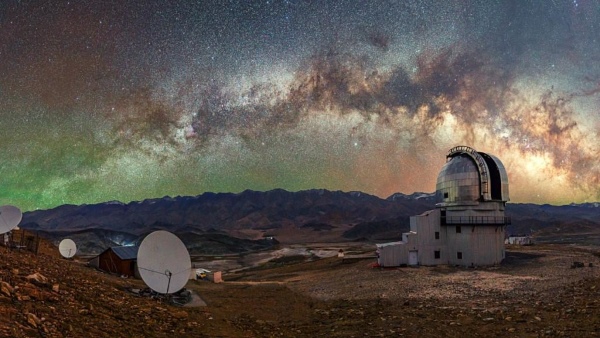
- How to Reach: Fly to Leh. From Leh, it is a 255 km drive (approx. 7–9 hours) via Karu, Chumathang, and Nyoma.
- Transport: Private 4×4 or the weekly JKRTC bus (leaves Leh on Saturdays at 6:30 AM).
- Permit & Fees: No Inner Line Permit (ILP) required for Indians as of 2026. However, you must pay the Environmental Fee (₹400) and Wildlife Fee (₹20/day) online at the LAHDC portal.
- Best Timing: Arrival by 4:00 PM to settle in for “Stargazing Sessions” (9:00 PM – 2:00 AM).
2. Srinagar, Jammu & Kashmir: The Tulip Renaissance
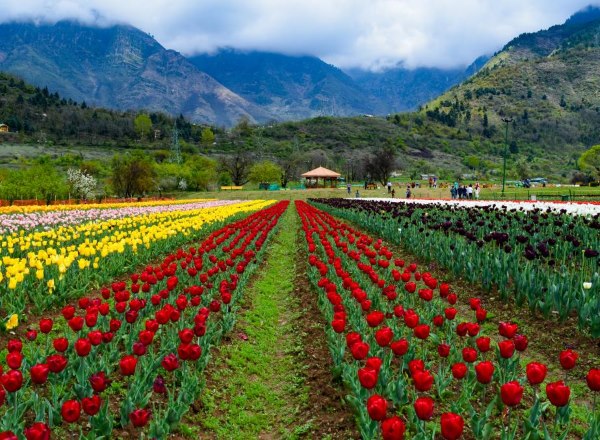
If Hanle is a study in monochrome and starlight, Srinagar in April is an explosion of color. The Indira Gandhi Memorial Tulip Garden, now the largest in Asia, hits its zenith this month. Over 1.5 million bulbs represent the resilience of the Valley’s horticulture. Beyond the flowers, April is the perfect time for “Slow Travel” on a Shikara. The Dal Lake is not yet crowded with summer tourists, and the surrounding Zabarwan Range is dusted with the last of the spring snow. It is a moment of profound peace before the mid-summer rush.
- How to Reach: Direct flights to Srinagar International Airport.
- Tulip Garden Details: Located at the foothills of the Zabarwan Range, near Dal Lake.
- Timings: 6:00 AM – 8:00 PM.
- Editor’s Tip: Visit between 6:30 AM – 8:30 AM for the “Golden Hour” light and to avoid the massive afternoon crowds.
- Entry Fee: ₹75 (Adults), ₹30 (Children).
3. Tawang, Arunachal Pradesh: The Spiritual Frontier
April marks the celebration of the Mopin and Aoling festivals in the Northeast. Tawang, perched at 10,000 feet, is a fortress of spirituality. The rhododendrons—the “roses of the mountains”—are in full bloom, painting the hills in shades of crimson and white. Following the 2026 infrastructure push, the Sela Tunnel has made the journey to Tawang more reliable, yet it remains a destination that demands respect. A visit to the Tawang Monastery, the second-largest in the world, offers a deep dive into the Monpa culture and the “Meaningful Travel” ethos we champion.
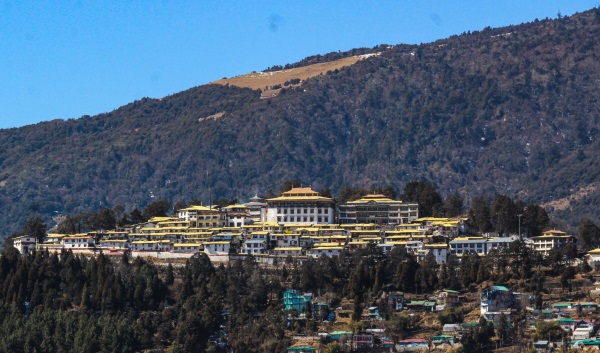
- How to Reach: Fly to Guwahati or Itanagar (Hollongi). Drive to Tawang (approx. 14–16 hours) with mandatory overnight stops in Bomdila or Dirang.
- Permits: ILP (Inner Line Permit) is mandatory for all Indians, available online at the Arunachal ILP portal.
- Highlights: The Sela Tunnel (fully operational in 2026) has reduced travel time by 1 hour and improved safety during early spring snow.
4. The Andaman Islands: The Blue Deep
While the mainland begins to heat up, the Andaman Sea remains a sanctuary of cool sapphire. April is widely considered the best month for Scuba Diving in Havelock and Neil Islands. The “Great Transition” of the winds means the sea is as flat as a mirror, and underwater visibility can reach a staggering 50 meters. For the Travellers Atlas reader, this isn’t just a beach holiday; it’s an exploration of one of the world’s most delicate coral ecosystems. We recommend the “Citizen Science” diving programs, where travelers can assist in coral restoration projects.
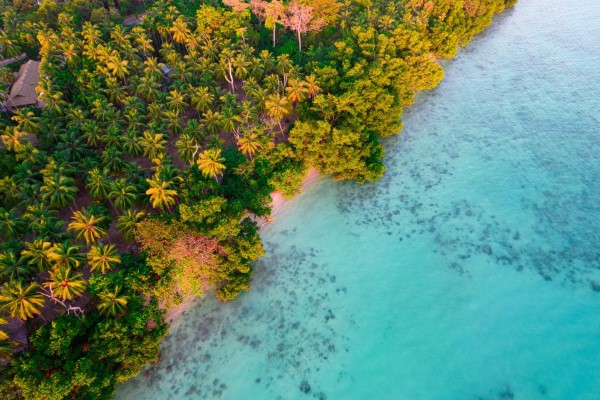
- How to Reach: Fly to Port Blair. Take a private AC ferry (Makruzz or Nautika) from Haddo Jetty.
- Ferry Timings: First ferry at 6:00 AM; last at 2:00 PM.
- Scuba Diving Timings: Slots usually run from 7:00 AM to 1:00 PM.
- Other Aspects: Pre-book ferries at least 15 days in advance as April is the peak “Blue Water” season.
5. Amritsar, Punjab: The Golden Harvest
To understand the heartbeat of India, one must be in Punjab during Baisakhi (April 14). This is the “Cultural Town” at its most vibrant. The Golden Temple reflects the spirit of Seva (selfless service) on a scale that is world-renowned. Beyond the city, the “Agri-Tourism” circuit is in full swing. The mustard fields are being harvested, and the air is thick with the scent of woodsmoke and celebration. It is a visceral, sensory experience that connects the traveler to the soil and the soul of the subcontinent.
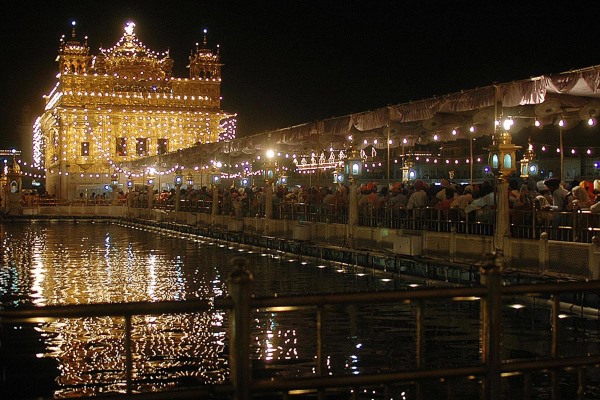
- How to Reach: Well-connected via Sri Guru Ram Dass Jee International Airport and the Vande Bharat Express from Delhi.
- Baisakhi (April 14) Timings: * 3:00 AM: Palki Sahib Procession (The most spiritual moment).
- 9:00 AM – 12:00 PM: Peak crowds for Nagar Kirtan.
- Logistics: Stay within walking distance of the Golden Temple; transport inside the old city is virtually impossible on Baisakhi day.
6. Pachmarhi, Madhya Pradesh: The Satpura Retreat
In a year where “Hills” are often synonymous with the Himalayas, Pachmarhi offers a rugged, ancient alternative. Known as the “Queen of Satpura,” this hill station is unique for its geological diversity. April is the time to explore the Jatashankar and Mahadeo caves. The forest canopy of the Satpura Tiger Reserve provides a natural air-conditioning, keeping temperatures significantly lower than the surrounding plains. It is a destination for the “Wild Landscape” enthusiast, offering a glimpse into the prehistoric rock art and the Gond tribal heritage.
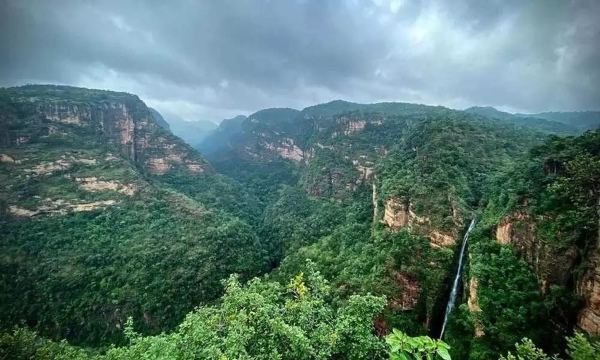
- How to Reach: Nearest railway station is Pipariya (50 km away). Regular buses and taxis are available from Pipariya to Pachmarhi (1.5 hours).
- Sightseeing Timings: Most points (Bee Falls, Dhoopgarh) are open from 8:00 AM – 6:00 PM.
- Permits: Satpura National Park entry requires a permit (bookable online via MP Forest Dept).
7. Ziro Valley, Arunachal Pradesh: The Eco-Cultural Hub
Ziro is the poster child for our “Village Atlas” series. In April, the Apatani tribe prepares their unique wet-rice cultivation systems. The valley is a masterclass in indigenous engineering, where fish are reared in the same water used for rice. Travelers in 2026 are increasingly drawn to Ziro for its “Unplugged” appeal. There are no grand hotels here, only homestays that offer a seat at the hearth. It is a place to learn about the “Taboos” that have protected these forests for centuries.
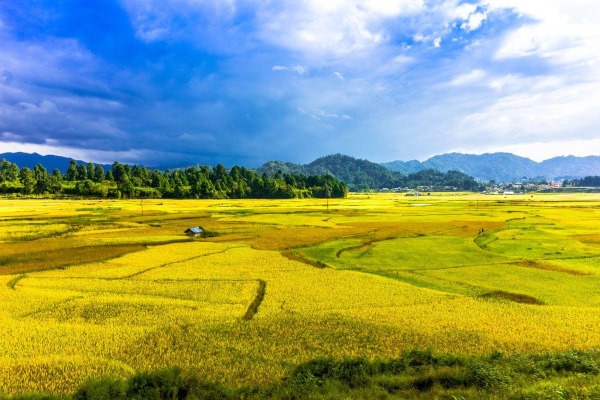
- How to Reach: Nearest railhead is Naharlagun (Itanagar). From there, it is a 3–4 hour drive.
- Permit: ILP is mandatory.
- Travel Strategy: April coincides with the Mopin Festival. Aim to stay in a “homestay” in the Hong or Hari villages to experience the Apatani tribe’s hospitality.
8. Gokarna, Karnataka: The Soulful Coast
As Goa moves toward a more commercialized future, Gokarna remains the bastion of the “Slow Beach” movement. The Coastal Heritage Circuit, highlighted in our recent policy analysis, has preserved the sanctity of the Mahabaleshwar Temple while opening up the five famous beaches (Om, Kudle, Half Moon, Paradise, and Gokarna Main) for sustainable trekking. In April, the evening sea breeze provides a reprieve from the tropical sun, making it the ideal spot for a “Wellness Sabbatical.”
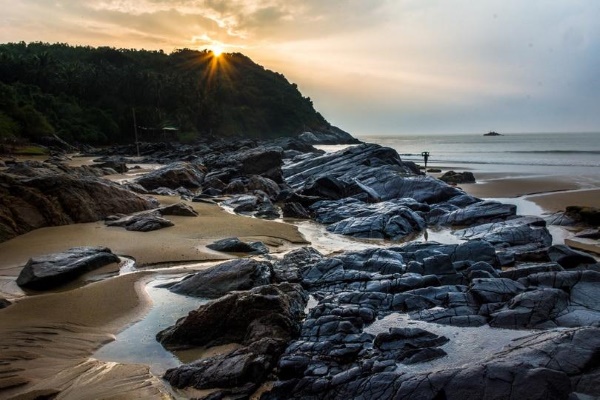
- How to Reach: Fly to Dabolim (Goa) and drive 4 hours (140 km). Alternatively, take a train to Gokarna Road station.
- The Beach Trek: Start at 7:00 AM from Kudle Beach to reach Paradise Beach by 11:00 AM before the sun gets too sharp.
- Timings: Mahabaleshwar Temple: 6:00 AM – 12:30 PM & 5:00 PM – 8:00 PM.
9. Munnar, Kerala: The Emerald Trails
April in Munnar is “Tea Season.” The “First Flush” of the year is being harvested, and the hills are a vibrant, manicured green. We recommend the Tea Science Trails, a 2026 initiative that allows travelers to stay within the estates and learn the chemistry behind India’s favorite beverage. The Eravikulam National Park is also a highlight this month, as the Nilgiri Tahr are often spotted with their young ones against the backdrop of the blooming Anamudi peak.
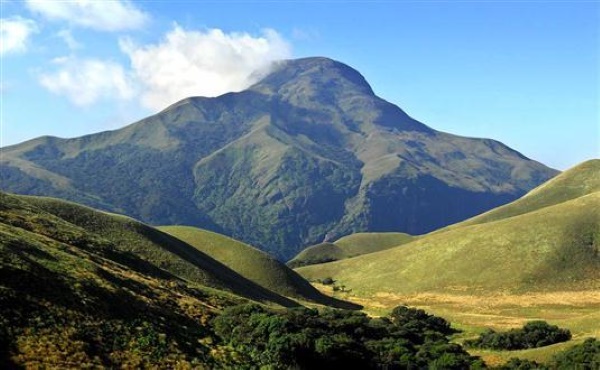
- How to Reach: Nearest airport/railway station is Kochi (110 km). A 4-hour scenic drive.
- Tea Factory Timings: Usually 9:00 AM – 5:00 PM (Closed on Mondays).
- Trekking: Eravikulam National Park opens at 7:30 AM. Book “Rajamalai” safari tickets online to save 2 hours of queuing.
10. Jaisalmer, Rajasthan: The Desert’s Last Stand
While most shy away from the desert in April, we argue it is the best time for a “Dark Sky” desert experience. In the quiet dunes of Khuri, away from the tourist traps of Sam, the night sky is a velvet curtain of stars. The “Deserts” of Rajasthan in April offer a stark, haunting beauty. The daytime heat is balanced by the cultural warmth of the desert folk. It is a journey for the resilient traveler who wants to experience the Thar in its most authentic, unvarnished state.

- How to Reach: Direct flights to Jaisalmer Airport or the overnight “Delhi-Jaisalmer Express.” Khuri is 45 km from the city.
- Safari Timings: * Sunrise: 6:30 AM – 8:30 AM.
- Sunset/Overnight: Starts at 4:30 PM.
- Climate Alert: Afternoon temperatures can hit 38°C; plan all outdoor desert activities for before 9:00 AM or after 5:00 PM.
Comparison Table for April 2026
| Destination | Category | Highlight | Temp Range |
| Hanle | Astro-Tourism | Dark Sky Reserve & Meteor Showers | -5°C to 12°C |
| Srinagar | Hills/Floral | Tulip Festival in Bloom | 8°C to 20°C |
| Andaman | Beaches | Peak Scuba Visibility | 24°C to 32°C |
| Amritsar | Cultural | Baisakhi Harvest Festival | 18°C to 34°C |
| Tawang | Spiritual | Rhododendron Blooms & Monasteries | 5°C to 15°C |