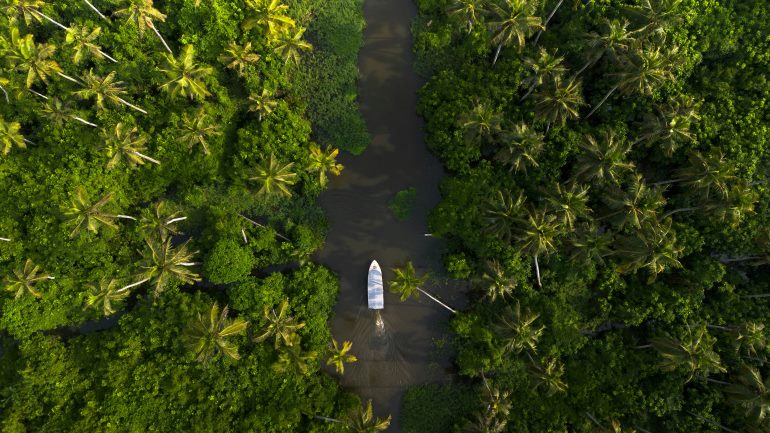
For decades, the global imagination of Kerala has been painted in a singular, seductive palette: the emerald tranquil of the Alleppey backwaters, the slow drift of kettuvallams (houseboats) through coconut groves, and the sun-drenched sands of Kovalam. This is the Kerala of postcards—beautiful, timeless, but increasingly crowded.
Yet, if you turn your gaze away from the coastline and travel north towards the tri-junction where Kerala meets Karnataka and Tamil Nadu, the landscape transforms dramatically. Here, the monoculture of coastal tourism gives way to the rugged, mist-shrouded peaks of the Western Ghats. This region—encompassing the highland districts of Wayanad and parts of Kannur and Kasaragod—forms the spectacular, untamed northern edge of the Nilgiri Biosphere Reserve.
For the modern traveller seeking “meaningful before magical” journeys, Northern Kerala’s highlands offer a sanctuary of biodiversity, ancient tribal heritage, and a quiet, unhurried luxury that money cannot buy in more commercialized hill stations. This is a journey into the untouched Nilgiris of Kerala.
The Geography of Silence: Wayanad’s High Altitude Frontiers
While southern Wayanad draws weekend crowds from Bengaluru and Calicut to Vythiri and Lakkidi, Northern Wayanad remains a bastion of isolation. As you ascend the winding ghat roads, the air turns crisp, thick with the scent of wild cardamom and damp earth.
The crown jewel of this region is Brahmagiri, a majestic mountain range straddling the border of Kerala’s Wayanad and Karnataka’s Coorg. Unlike the manicured tea gardens of Munnar, the landscape here is dominated by shola forests—stunts of tropical montane forest nestled in the valleys, surrounded by undulating grasslands.
+--------------------------------------------------------------+
|               THE NILGIRI BIOSPHERE TRI-JUNCTION             |
|                                                              |
|   [ KARNATAKA ]               [ TAMIL NADU ]                 |
|   Coorg's Coffee Estates      Ooty & Mudumalai               |
|            \                         /                       |
|             \                       /                        |
|              \                     /                         |
|             [ NORTHERN KERALA HIGHLANDS ]                    |
|             Wayanad, Brahmagiri, Aralam                      |
|             (Untouched Shola Forests & Tribes)               |
+--------------------------------------------------------------+
A trek up Brahmagiri is a lesson in ecological humility. The trail takes you through dense canopies where the sunlight barely touches the forest floor, emerging suddenly into vast, windswept meadows. If you are quiet, and lucky, the mist will part to reveal a herd of Asian elephants grazing on the distant slopes, or the quick, golden flash of a Malabar giant squirrel darting through the trees.
At the base of these mountains lies Thirunelli Temple, an architectural marvel constructed of heavy granite pillars, tucked deep inside the valley. Known as the “Sahyamalaka Kshethram,” this ancient temple is surrounded by the Kambamala, Karimala, and Varadiga hills. The temple is a testament to how spirituality and nature coexist in the Nilgiris; the water in the temple pool is brought from the deep forest via an ancient aqueduct system made of stone channels that still functions perfectly today.
The Sentinels of the Forest: Meeting the Indigenous Custodians
What truly separates the northern Kerala highlands from other commercial hill stations is its living human heritage. Wayanad is home to the largest population of indigenous tribes (Adivasis) in Kerala, including the Paniyars, Mullu Kurumbas, and Kattunayakans.
For centuries, these communities have lived as the designated guardians of the Nilgiris. To experience this region authentically is to see the forest through their eyes. Responsible tourism initiatives in northern Wayanad now allow travellers to engage with tribal hamlets without disrupting their social fabric.
A walk guided by a Kattunayakan elder is a masterclass in ethnobotany. They can identify a hundred different plants by a single sniff of a leaf—pointing out which root cures a stomach ailment, which wild berry is sweet, and which vine yields drinking water during a drought. The Kattunayakans are traditional honey hunters, scaling towering trees and sheer rock faces using hand-woven bamboo ladders to collect wild forest honey during the spring.
In the evenings, if the elders are willing, you might hear the haunting strains of the thudi (a small drum) echoing through the hills, accompanying oral histories that have never been written down, but have survived for thousands of years. This connection to human history is deeply visceral at the Edakkal Caves on Ambukuthi Mala. Here, Neolithic rock carvings dating back over 8,000 years depict human figures, animals, and symbols, proving that these mist-laden peaks have enchanted humanity since the dawn of civilization.
The Wild Corridors: Aralam and the Expansion of Green Cover
To understand the scale of conservation in Northern Kerala, one must venture slightly west of Wayanad into the Aralam Wildlife Sanctuary, located on the slopes of the Western Ghats in the Kannur district. Aralam is unique because it represents one of the most successful efforts in the state to allow nature to reclaim its own. Areas that were once commercial cashew plantations have been systematically re-wilded into dense, contiguous forests.
Aralam is a haven for birdwatchers and butterfly enthusiasts. During the post-monsoon months, the sanctuary witnesses the spectacular phenomenon of butterfly migration, where millions of Blue Tigers, Crows, and Albatrosses flutter through the forest paths like living confetti.
The sanctuary is also home to the elusive Nilgiri langur, the lion-tailed macaque, and serves as an important migratory corridor for elephants moving between the forests of Karnataka’s Brahmagiri and Kerala’s lowlands. Unlike the heavily commercialized jeep safaris of national parks elsewhere, exploring Aralam involves low-impact trekking accompanied by forest guards, ensuring that the human footprint remains minimal.
Quiet Luxury and Sustainable Sojourns
As the global traveller shifts toward low-impact, high-meaning accommodation, Northern Kerala’s hospitality sector is pivoting gracefully. The focus here is not on expansive, concrete mega-resorts, but on “adaptive luxury”—boutique eco-lodges, homestays, and plantation bungalows that blend seamlessly into the environment.
In the remote pockets of Mananthavady and Sulthan Bathery, old plantation bungalows built during the British era have been restored with painstaking care. These estates offer travellers a chance to experience the slow life. Days begin with a cup of single-origin Robusta coffee grown right outside your verandah, followed by long walks through pepper and vanilla orchards.
Many of these properties operate completely off-the-grid, utilizing solar power, harvesting rainwater, and sourcing 100% of their kitchen ingredients from their organic gardens or neighboring tribal farmers. Luxury here is redefined: it is the luxury of clean air, natural spring water flowing straight from the mountains, an absence of cellular network bars, and the symphony of cicadas replacing the hum of urban traffic.
Travel Practicalities for the Conscious Explorer
- How to Get There: The gateway to Northern Kerala is the Kannur International Airport (CNN), which is exceptionally well-connected to major Indian metros and the Middle East. From Kannur, a scenic three-to-four-hour drive through the mountain passes brings you into the heart of the northern highlands. Alternatively, the region can be accessed via Kozhikode (Calicut) airport.
- When to Visit: The best time to experience the untouched Nilgiris is from October to March when the weather is cool and ideal for trekking. However, for those who love dramatic landscapes, the monsoon season (June to September) transforms the region into a vibrant, neon-green paradise of roaring waterfalls and mist.
- Travel Ethos: Remember that this is a sensitive ecological and cultural zone. Respect local tribal customs, refrain from using single-use plastics, choose local homestays, and always hire local community guides for treks.
The New Frontier of Kerala Tourism
As travellers increasingly search for destinations that offer authenticity over spectacle, the northern highlands of Kerala stand ready. By moving beyond the backwaters, you do not just see a different side of God’s Own Country; you step into a world where time slows down, where nature is still sovereign, and where the ancient spirit of the Nilgiris remains completely unbroken.